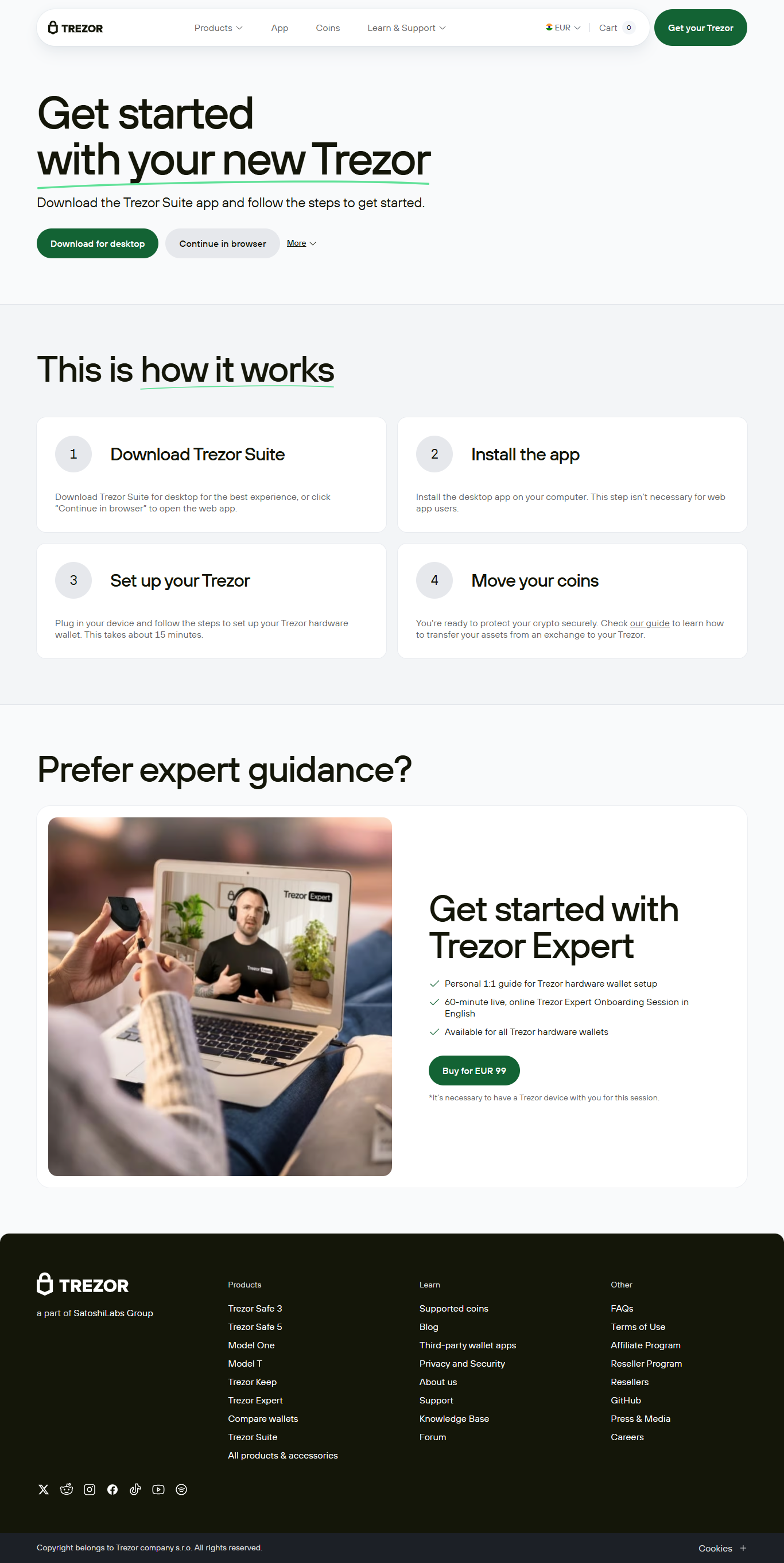
As the cryptocurrency industry continues to expand, securing digital assets has become more important than ever. With cyber attacks, exchange hacks, and malware threats increasing, crypto users must rely on proven security tools to safeguard their investments. Trezor, a hardware wallet built with advanced cryptographic technology, is one of the most trusted solutions available today. To access and manage crypto stored on a Trezor device, users must complete the Trezor login process—a secure authentication sequence that verifies ownership of the device and allows protected access to funds.
This comprehensive guide explores the Trezor login workflow, explains how it functions, outlines common problems, and offers best practices for protecting your digital wealth. Whether you recently purchased a Trezor wallet or want to deepen your understanding of its login system, this detailed article will help you navigate the process with confidence.
Traditional online accounts use passwords and emails to verify identity, but these methods are vulnerable to phishing attacks, database leaks, or simple brute-force attempts. Trezor eliminates these risks by applying hardware-based authentication. Instead of entering a password into a website, users must physically connect their hardware wallet and complete steps on both the device and the Trezor Suite interface.
The login process ensures that only the physical device owner can view balances, sign transactions, or modify security settings. This approach provides significantly stronger protection compared to software wallets or exchange-hosted accounts.
Trezor login is a multi-step verification method that incorporates physical access, PIN entry, and optional passphrase input. Each action is designed to eliminate vulnerabilities at every level, ensuring your cryptocurrency remains protected even if your computer is compromised.
Here is what happens behind the scenes during a login session:
These combined measures create a secure environment that ensures attackers cannot access your assets remotely.
Before performing your first login attempt, you must initialize your device. During setup, you will create your PIN, generate a recovery seed, and define optional security features. This is an essential part of the process, because Trezor cannot function without proper initialization.
Once initialization is complete, the login process becomes straightforward and quick.
Trezor Suite is the primary platform for interacting with your hardware wallet. It offers real-time portfolio tracking, transaction management, a built-in exchange module, and various security controls.
To perform a Trezor login using the Suite:
Once logged in, you can check balances, send and receive funds, manage accounts, review transaction history, and adjust security preferences.
In addition to the desktop version, Trezor provides a web-based interface. This option is ideal for users who prefer not to install additional software or who want quick access from multiple devices.
The web login process works similarly to the desktop version, but it relies on Trezor Bridge—a secure communication tool that allows browsers to detect and interact with your Trezor device.
Once verified, your wallet interface becomes accessible through the browser.
The PIN is an essential feature of Trezor login. It protects your device if it falls into the wrong hands. The PIN entry process is uniquely designed to prevent screen-recording malware from detecting your input. Instead of displaying numbers on your computer, Trezor shows a scrambled layout on your hardware device.
This randomized pattern ensures that even if a hacker sees your keystrokes, they will not know the correct PIN.
Trezor offers a powerful security enhancement called the passphrase. This feature acts as an additional password that opens a unique wallet protected by both your seed phrase and your passphrase.
Even if your recovery seed is compromised, a strong passphrase prevents attackers from accessing your main funds. Many users create multiple passphrase-based wallets for different purposes such as:
The passphrase never appears on your device or in the Suite; it exists solely in your memory. This makes it a powerful tool, but it must be used with caution.
Although Trezor login is reliable, occasional issues may occur. Understanding how to troubleshoot them ensures you can quickly regain access to your funds.
If the Suite fails to detect your device, try:
Extensions like script blockers may interfere with Trezor login. Disabling them or switching to a recommended browser often solves the issue.
Entering the incorrect PIN triggers time delays. If the PIN is forgotten, a device wipe and seed recovery will be required.
Outdated firmware may block login attempts. Updating to the latest version is essential for security and device compatibility.
Security software may incorrectly identify Trezor Suite as a threat. Whitelisting or adjusting settings can resolve this.
The recovery seed is the ultimate backup for your Trezor wallet. It allows full restoration of your crypto funds in case the device is lost or damaged. The seed phrase must be written down and stored securely.
Never:
Anyone with access to your seed can restore your wallet. Therefore, protecting it is one of the most important responsibilities of a Trezor user.
Trezor offers two main hardware wallets, and each has a slightly different login experience.
While both models provide robust security, the Model T offers a smoother and more user-friendly login workflow.
Following these best practices ensures maximum protection when using Trezor login:
Adopting these practices reduces the risk of theft, hacking, or unauthorized access.
Trezor has earned widespread respect due to its commitment to transparency and open-source development. Its login system is built around cryptographic standards, physical authentication, and privacy-focused technology. These elements combine to create a secure environment suitable for storing both small and large quantities of cryptocurrency.
Because the login process relies on the physical device, remote attackers are unable to steal funds without direct access to the hardware wallet. This makes Trezor an excellent choice for both beginners and experienced investors looking to maximize security.
The Trezor login system is a cornerstone of hardware-based crypto security. By combining physical authentication, PIN protection, passphrase options, and encrypted communication, Trezor provides one of the safest environments for managing digital assets. Whether you use Trezor Suite or the Web App, the login process ensures your funds remain shielded from online threats.
Understanding how the login system works, recognizing common issues, and applying recommended security practices will help you get the most out of your hardware wallet. With Trezor, you gain peace of mind knowing that your crypto remains under your control—secure, private, and protected.